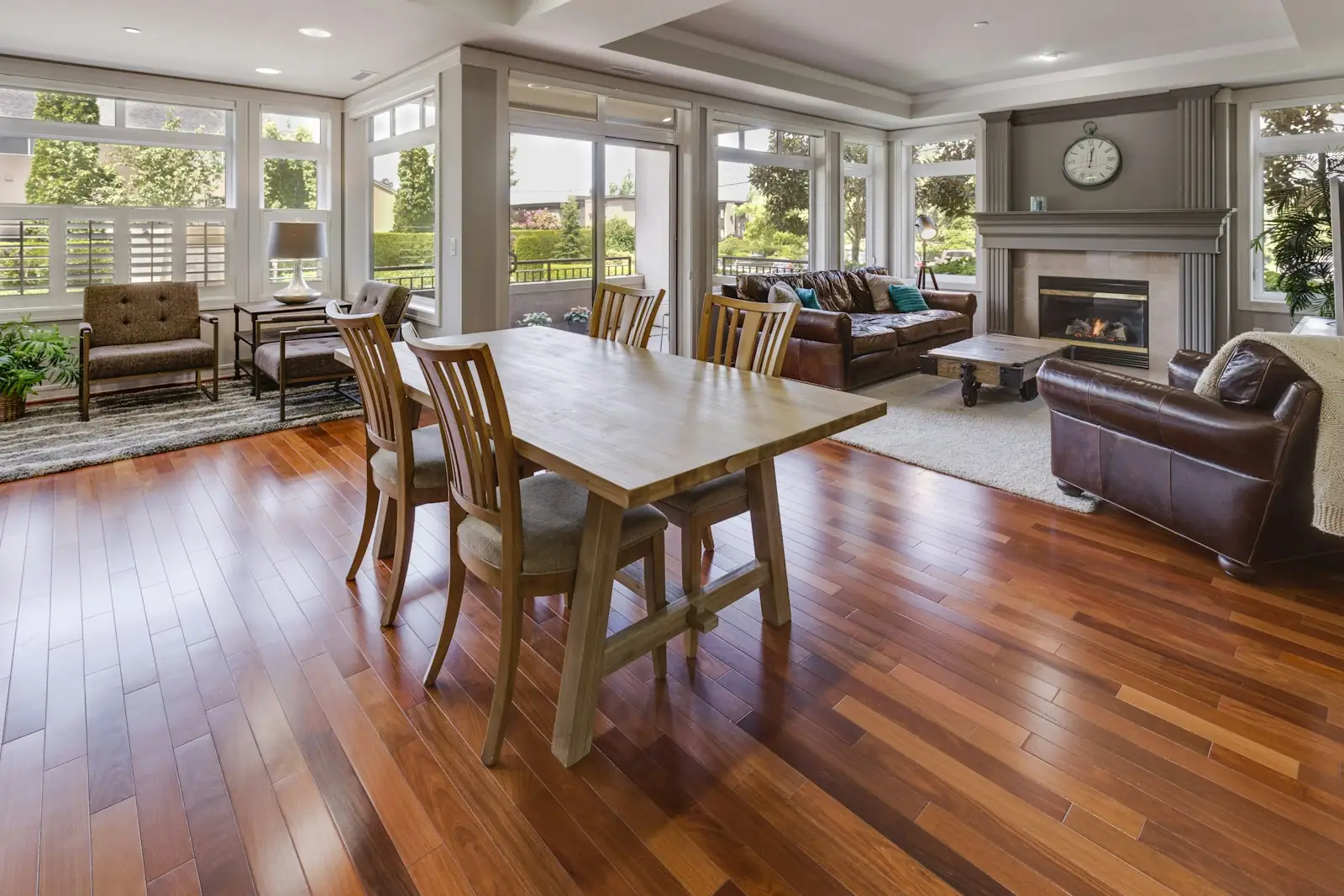
Flooring and hardwood
Our flooring installation covers hardwood, engineered boards, laminate, vinyl plank and porcelain tile. The subfloor gets fixed first, because a new floor on a bad base squeaks within a year.
What is the best flooring for a basement?
Vinyl plank is the best floor for most basements. It does not mind damp, it floats over concrete, and it looks like wood. Porcelain tile is the other safe choice. Solid hardwood does not belong below grade, because concrete breathes moisture into it and it cups.
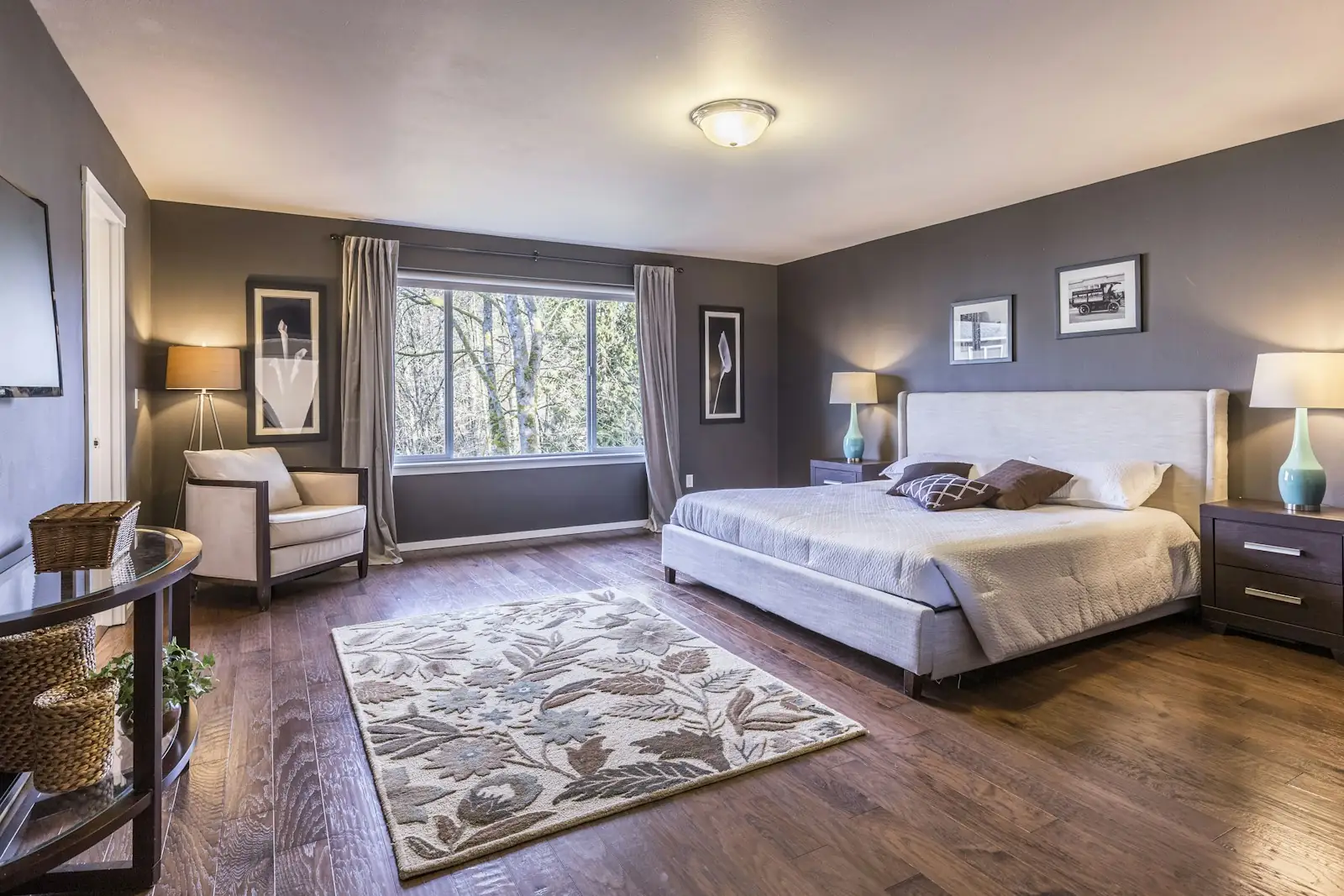
Wood, plank or tile
Three families of floor, each right for different rooms. We will tell you which one fits yours and why.
Hardwood
Hardwood flooring installation with solid or engineered boards, nailed or glued. Warm, long lasting, and it can be sanded and refinished later.
Laminate and vinyl plank
Vinyl plank flooring installation and laminate are tough, water resistant and quick to lay. The right call for basements, rentals, kitchens and homes with big dogs.
Tile
Porcelain for entries, kitchens and bathrooms. Cold underfoot unless we add a heated mat.
What changes a flooring quote
The floor you pick sets most of the installation cost. The floor underneath sets the rest.
- Removing tile, which is slow and heavy.
- Moving furniture, appliances and baseboards out and back.
- A subfloor that needs levelling compound.
- Stairs, which take as long as a whole room.
- Herringbone or diagonal patterns.
- Solid hardwood instead of engineered or laminate.
How a flooring job runs
A floor runs in six steps. Half of them happen before you see a single new board. Our quote, contract and payment steps are the same on every job, and the process page sets them out.
Walk the rooms
We check for squeaks, dips and soft spots, and measure moisture in the subfloor and the concrete. We also note where heat registers sit, so the boards run the right way past them.
Remove the old floor
Carpet, old laminate or tile comes out. Staples and glue are scraped off.
Fix the subfloor
Loose sheets are screwed down. Low spots are filled. Damaged wood is replaced.
Let the wood settle
Hardwood sits in the house a few days so it matches your humidity.
Lay the floor
We start off the longest straight wall and run the pattern through the doorways. Where the floor meets tile or carpet, the transition is planned before the first row goes down.
Trim and transitions
Baseboards, quarter round and the strips between rooms go on. Doors are trimmed to clear the new height, so they close without dragging.
What people ask about flooring and hardwood
Three flooring questions we answer on most first visits.
- Question 1
Can you install hardwood flooring over existing flooring?
Engineered hardwood can go over tile, vinyl or old hardwood if the old floor is flat, dry and solid. Solid hardwood cannot. It has to be nailed to a wood subfloor, so the old floor comes out. Carpet always comes out first.
- Question 2
Does hardwood need to acclimate before installing?
Yes. The boxes sit open in the room for a few days before we lay them. The heat or air conditioning should run as it normally will, so the wood adjusts to real living conditions. Wood that goes down straight off the truck swells or shrinks later and opens gaps between the boards.
- Question 3
What does it cost to install hardwood flooring per square foot?
Installation is charged per square foot of floor, and the wood is priced on its own line. We set your rate after measuring the rooms and checking the subfloor. Pulling up an old floor, levelling dips, stairs and rooms full of angles all raise it. A straight run in an open room costs the least per foot.
Problems we find on flooring jobs
We pull up a lot of old floors. These three problems are under most of them.
Squeaks
The subfloor has pulled away from the joists. Screws fix what the old nails could not.
A hump or a dip
A joist has moved or a patch was done badly. We plane the hump or fill the dip before laying anything.
Moisture in the slab
Concrete that reads wet will ruin a wood floor. We test it and pick a floor that can take it.
Floors stacked on floors
Some rooms hide two or three old floors laid on top of each other. That lifts the doorways and hides damage, so we strip down to the subfloor before the new one goes in.
When a refinisher is who you need
If you want your existing hardwood sanded and refinished, a floor refinishing company with dustless sanders is the better call. We install new floors.