Backsplash
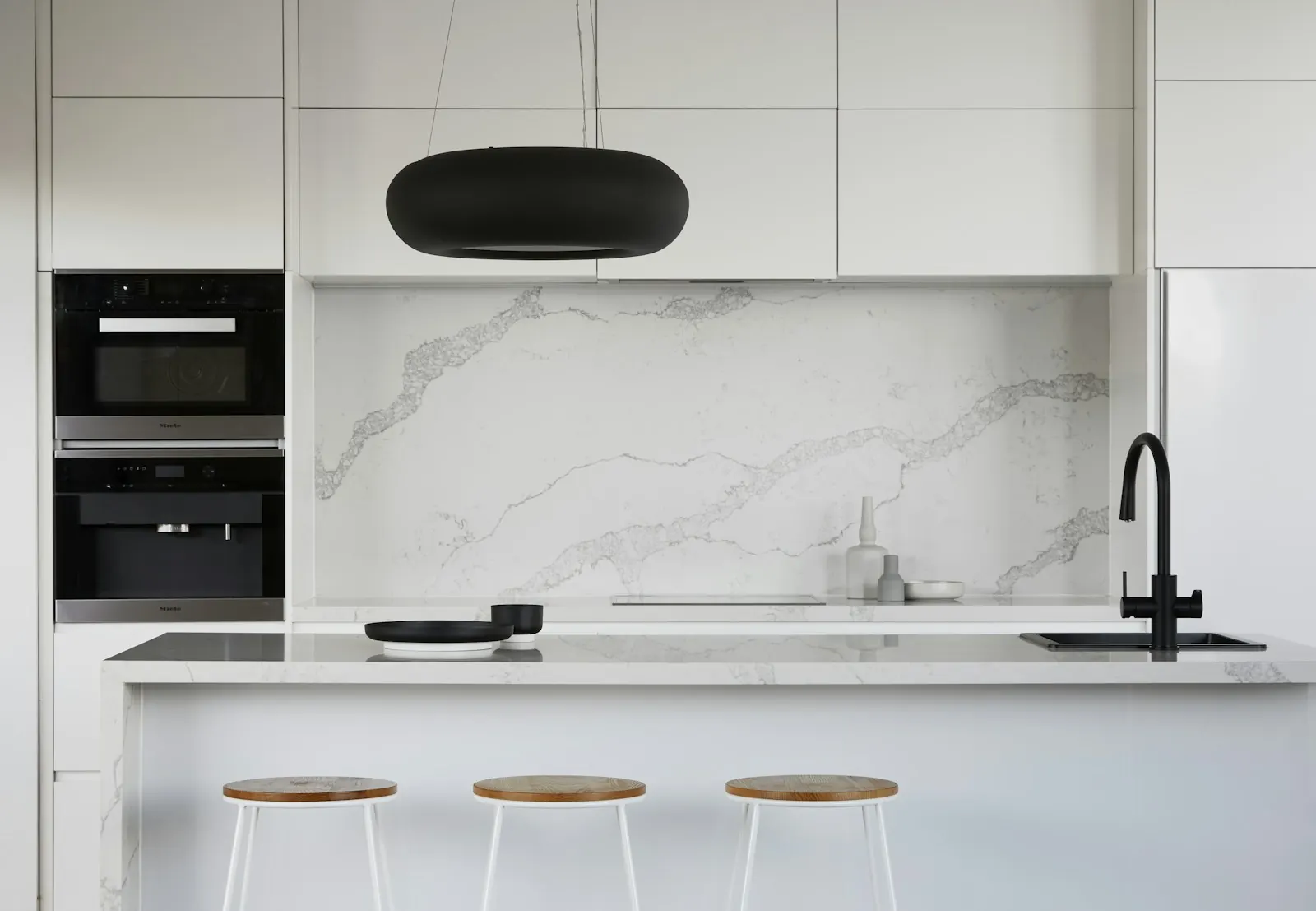
The quick win in a kitchen. Subway tile, mosaic or a slab look. One or two days of work.
We are a tile installation contractor for floors, showers, tub walls, backsplashes and fireplaces in porcelain, ceramic and natural stone. Flat walls and tight grout lines are the whole trade, and we spend most of our time on the first one.
Porcelain is fired hotter and denser, so it absorbs almost no water and resists chips. It suits floors, showers and outdoors. Ceramic is softer and cheaper, and it is fine on walls and backsplashes that do not get walked on or soaked. For a shower floor or a busy hallway, we use porcelain.
Tile runs in six steps. The first two take longer than the tiling itself, and they are why the finish holds. See the process page for the stages every job shares, plan to finish.
Walls and floors are checked with a long level. Tile shows every bump, so low spots are filled and high spots ground down first.
Cement board or a waterproof board on wet walls, membrane in showers, primer on floors.
We dry-lay the tile so cuts land at the edges and the pattern is centred where you look.
Thinset, levelling clips, and a straight edge on every row. Large tiles are back-buttered.
After the thinset cures, grout goes in. Epoxy grout in showers if you want it. Stone gets sealed.
Metal edges, bullnose, and silicone in every corner and change of plane.
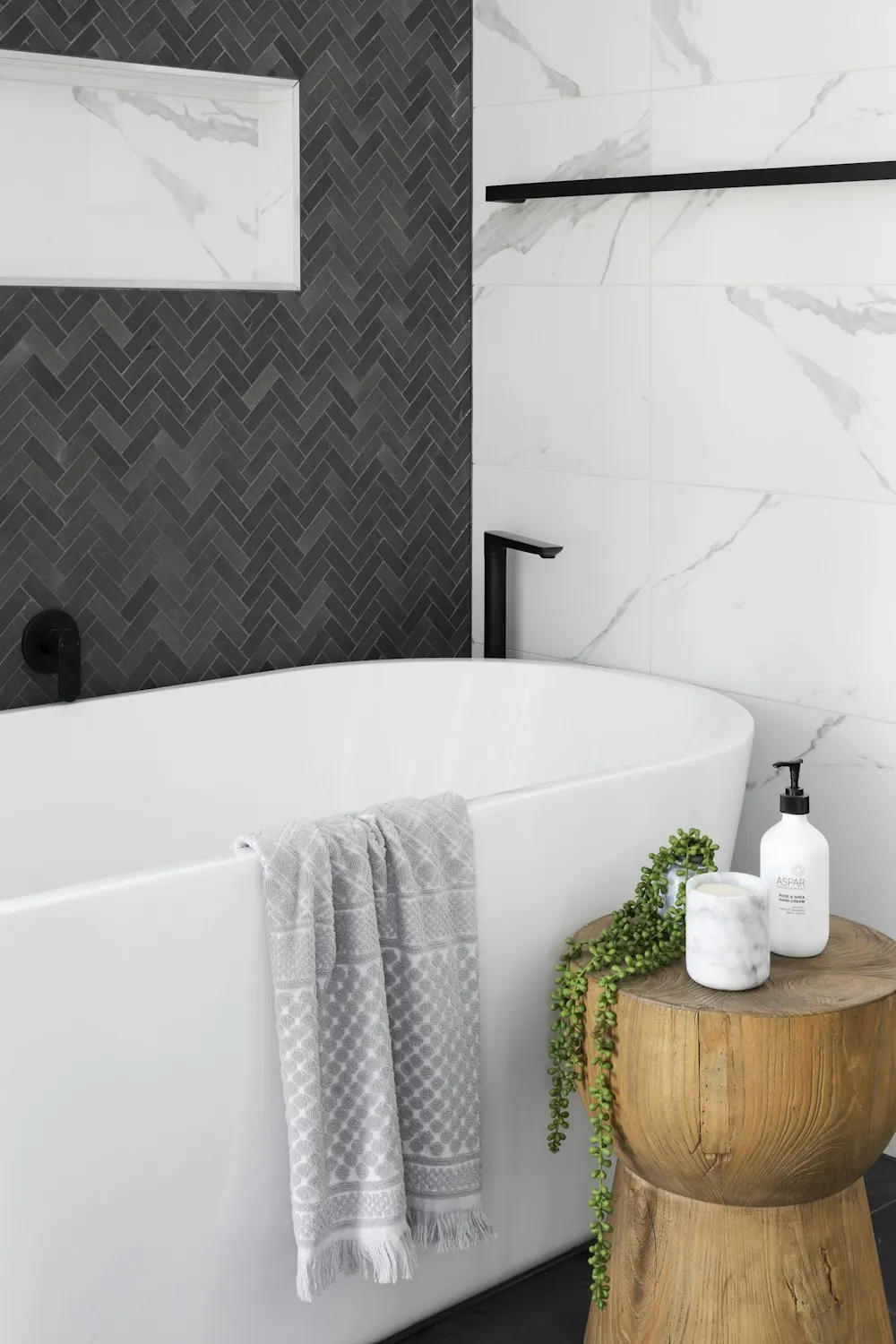
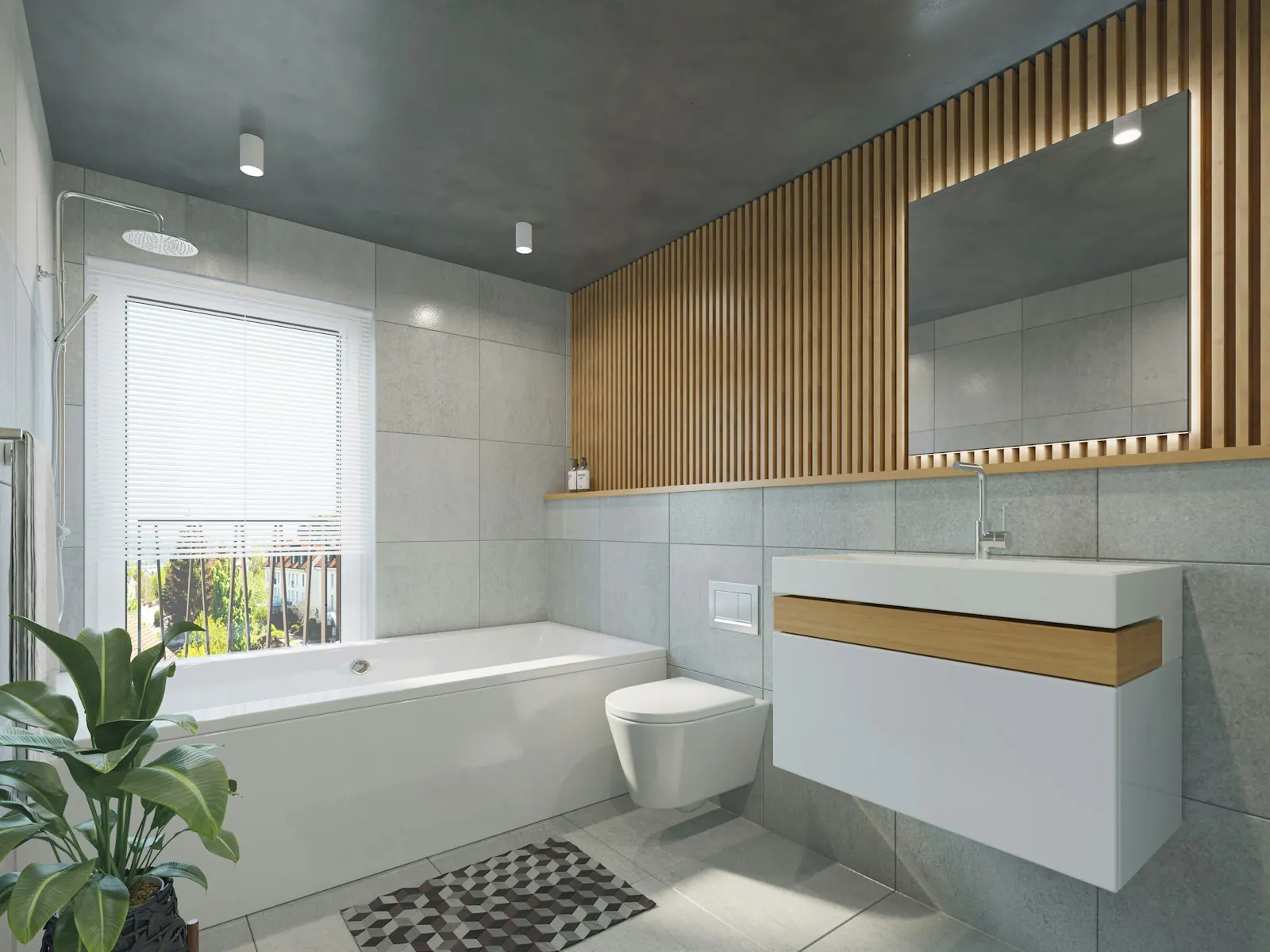
Example tile work for the look, not jobs we did. Real photos of our showers and floors are yours for the asking.
Tile work splits into three jobs by where the tile goes. The wet ones get the most prep.
The quick win in a kitchen. Subway tile, mosaic or a slab look. One or two days of work.
The job where waterproofing matters most. Membrane, then tile, then sealed grout. Niches and benches built in.
Large porcelain on floors, stone or slim tile on a fireplace wall. Heated mats under bathroom and entry floors.
Old tile comes off and shows what the last tiler skipped. These three come up the most.
The wall behind is soft. It comes out and gets a proper board and membrane.
Tiles set without full contact crack later. We back-butter large tiles so they are fully bedded.
Grout cannot flex where the tub meets the wall. That joint gets silicone, not grout.
Older bathrooms set tile in a heavy layer of mortar. It comes out in slabs, and the subfloor under it often needs repair before new tile can go down.
In tile installation, the tile itself is rarely the biggest cost. The shape of it and the wall under it are.
Three tile questions that come up again and again.
Yes for cement grout, which is what most showers have. Sealing stops water and soap from soaking in and staining it. Epoxy grout does not need sealing. Either way, the corners get silicone, not grout, so they can move without cracking.
Yes, if the wall is flat. Heavy porcelain panels may also need a stronger board behind them and a mortar made for large tile. A large tile shows every bump, so we straighten the wall first, then set the tile with levelling clips so no edge sticks up. Big tiles mean fewer grout lines to clean.
Panels usually cost less, because a few large sheets go up faster than hundreds of tiles and need no grout. Tile costs more but gives you any pattern, a matching floor, and a niche or bench built into the wall. Both need a sound, sealed wall behind them, and we can price each one side by side.
If you have one cracked tile and a box of spares, a handyman can swap it. We take the jobs where the whole surface is done.